Author: Melissa Sigodo
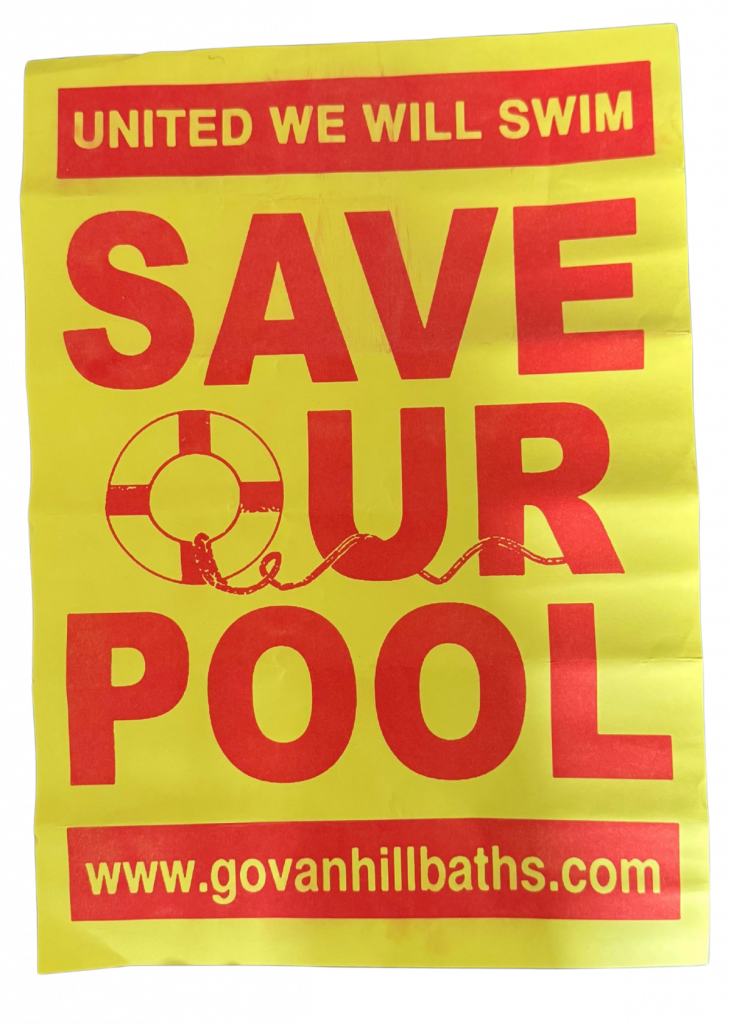
When a group of mothers chained themselves to cubicles at a Victorian bath house in 2001, they hadn’t foreseen sparking the longest consecutive running occupation of a public building in Britain. In the most diverse residential area of Glasgow located south of the River Clyde, passionate members of the Govanhill community proceeded to spend 140 days fighting against the baths’ closure, facing a violent stand-off with police on horseback but ultimately saving their beloved 100-year-old venue. Relying solely on walkie talkies and a local telephone booth to sneak people in and coordinate movements around family and work – the nearly five-month sit in was “tough but exhilarating”, activist Fatima Uygun says. But now, 25 years since that freezing day in March which ignited a movement – the ethos of a local campaign to defend the baths from privatisation has become the heartbeat of an even more empowered community tackling food and climate injustice as well as racism and inequality.
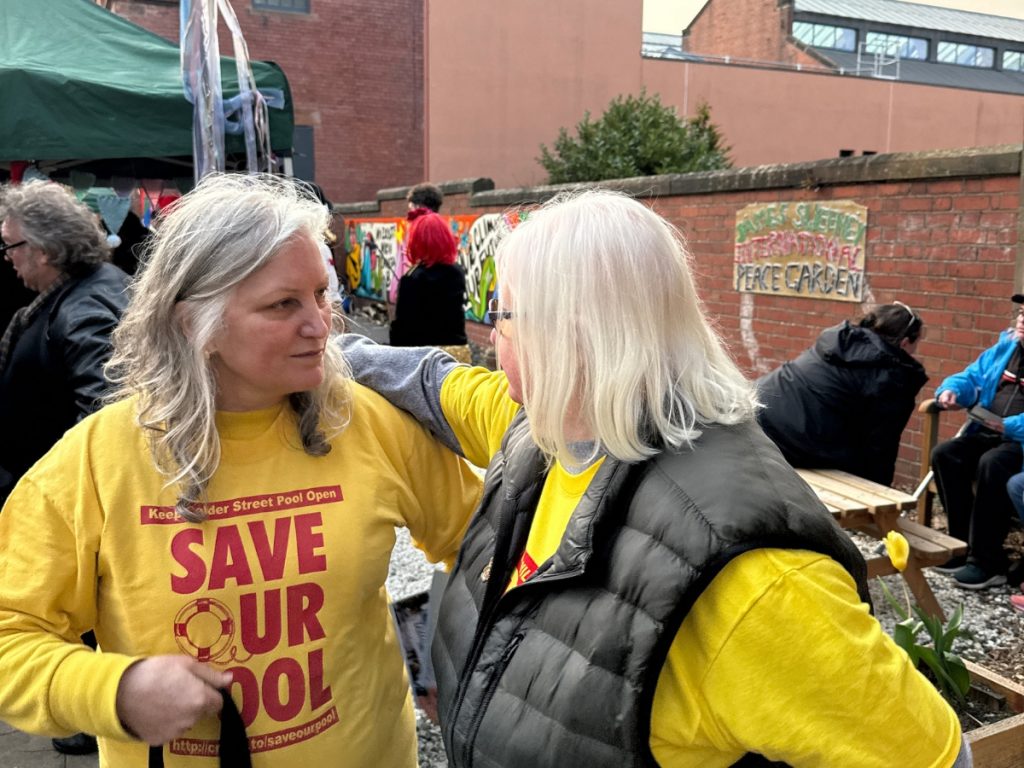
Fatima recalled the Govanhill Baths occupation as a decision that came naturally to the patrons who had heard about the planned closure. The self-described socialist labelled the council’s move a result of then-Prime Minister Tony Blair’s “neo-liberal push to remove the concept of community.” But for a “Turkish girl” who enjoyed the sauna’s provided by the historic venue and had since adopted the long Glaswegian tradition of occupying shipyards and publics spaces – she and the multicultural Govanhill community couldn’t let the council take the facility away. At 9pm on March 21, the sit-in named Save Our Pool – Southside Against Closure Community Action Group led by a group called Friends of Govanhill Baths wasn’t simply about protecting personal pleasures at one of the largest swimming clubs in Glasgow – the core of the campaign meant saving a space that served a “quiet, hidden purpose.”
“When it was announced that it was going to close, it wasn’t just affecting one demographic”, Fatima said.
“The kids swimming clubs and the parents were just outraged because they would have to take their kids miles and miles away.”
“We had the Muslim men and the gay men who used the sauna as part of both their cultures, and they were outraged because they’d have nowhere else to go. Same with the women.”
“Asian women used the baths a lot because other than their home, there was nowhere else for Asian woman to socialise and meet one another. All the communities that used it were able to negotiate their own space within the building despite a lot of cultural, ethnic and religious differences.”
“The closure was affecting a huge amount of people because that building had served the community for 100 years. Parents, grandparents and so on had a history in that building.”
“It wasn’t just about bricks and mortar, people met there, people fell in love there.”
“It served a quiet hidden purpose that meant a lot to different communities.”
Occupants held a musical vigil once a week, while locals drove past donating money into a roadside bucket where a campaigner stood collecting contributions that helped keep the sit-in alive. But towards the end of summer, on August 7, 2001, mounted police from the regional force known then as Strathclyde moved in to evict the group while the council boarded up the building preventing Friends of Govanhill from re-entering. With tensions rising, an evening protest on the same day turned violent sparking calls for an inquiry into use of force by the police. With the picket line destroyed, Fatima says the end of the occupation was a day that left her “heartbroken.”
She said: “It took them 18 hours to secure the building because we had people hidden everywhere. The police were exhausted. There were hundreds of police.”
“When they smashed the windows and put security fences up, people went ballistic.”
“People got so angry. After they smashed the picket line that was difficult.”
“The day after we came back, to know that we didn’t have the building anymore – that was heartbreaking. But we came back, cleaned up the street and worked out a way to set up a charity.”
Following the community’s fierce determination to protect the baths, in 2004 the charity Govanhill Baths Community Trust (GBCT) was born with Fatima taking the position of Treasurer then a few years later as CEO.
After its formation and years of back and forth with the council, GBCT was able to take responsibility for running the building’s activities. However, the major renovation requirements for the 100-year-old Edwardian venue meant that the swimming facilities would remain closed.
Maariyah, a Pakistani-Scot working for GBCT says the closure of the baths has affected a generation who lost out on the empowerment that came with the pools, particularly for Muslim women who require separate swimming spaces.
She said: “I learned how to swim at the Govanhill Baths. It was a part of my childhood. I just remember being told that that’s our last lesson and I was just very confused as a child.
“I have nieces and nephews who don’t know how to swim. My best friend whose also Pakistani is so scared of water because she can’t swim. She was born around the time the baths were closing so she wasn’t old enough to start going to swimming lessons.”
“This has always been a very diverse community, and we don’t have anywhere else that’s close by. This was a real swimming experience in the heart of our community. We weren’t a minority in that space. We were a majority in that space. I think that was very powerful.”
“I feel like Muslims as females especially, will not go to the local swimming pools because they don’t have ladies only sessions anymore and Govanhill baths is planning on bringing that back.”
Indra who moved from Liverpool to Scotland and works alongside Maariyah says that exercise is now seen as a ‘middle-class activity’ but that it should be accessible to all.
“I think what Govanhill baths does as an organisation is saying everyone deserves well-being and activities. We’re in a strange time where fitness is seen as a middle-class thing whereas swimming is a life skill like riding a bike”, she said.
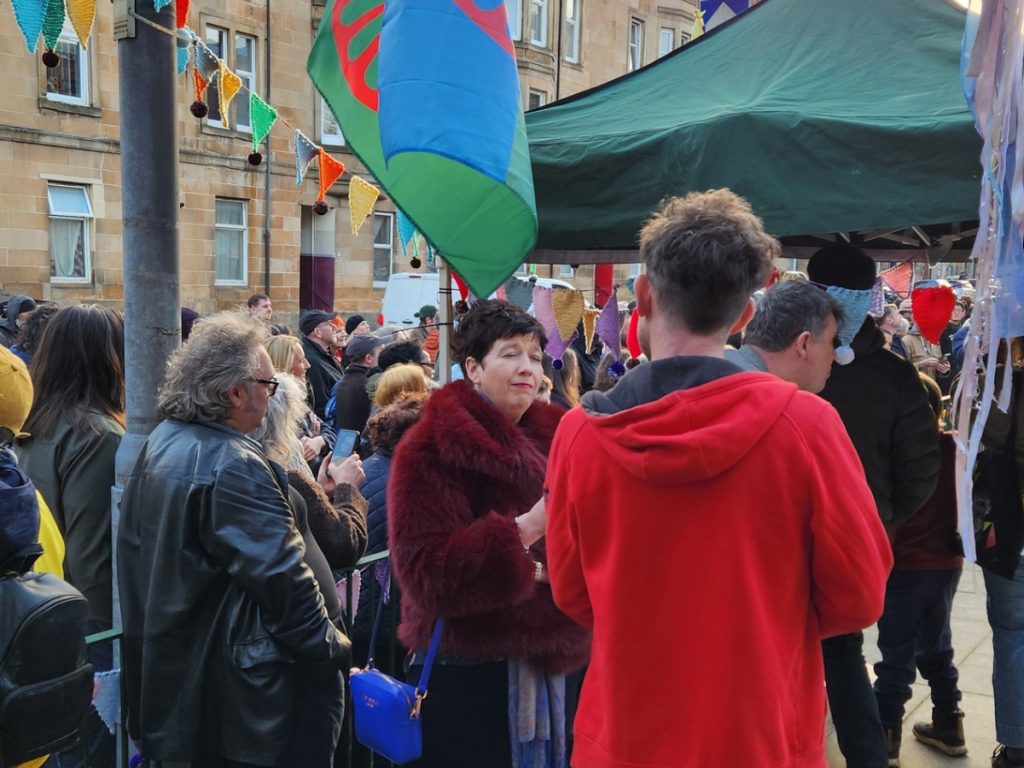
After raising £9 million to renovate the exterior of the building, the process of refurbishing the interior has been hit with delays as a result of the Covid pandemic, the effects of Brexit and the war in Ukraine which affected the cost of materials.
However, the pragmatic charity found ways to make use of the space whose foyer alone is the size of a “street block” allowing the building to host tours, workshops, fishing lessons, arts exhibitions and an upcycling project, Rags to Riches.
Fatima said: “Once we were kicked out, we couldn’t get entry back in till 2012 so we were out in the wilderness for a long time. We negotiated that with the council to be back in and to take over the foyer because it’s a whole street block. It’s a massive building with three pools.
“We ran yoga classes, wellbeing classes and that generated income.”
“We raised a quarter of a million pounds to refurbish the front, and we were in there till 2018 when we raised £9 million. But Covid hit and then it went downhill from there.”
“We had the cost-of-living crisis, and we had the war with Russia and Ukraine, it caused the largest inflation in the building sector for nearly 80 years. All the money we had for the building just went to making the building wind and watertight. It was external refurbishment, so the inside is pretty much untouched.”
But while the baths remain closed, the influence of GBCT has spanned across the Glaswegian suburb which is home to the largest Roma and ethnic minority community in Scotland. By creating numerous events and activities ranging from an anti-racism festival to pottery classes – GBCT has kept the spirit of social enterprise alive as the charity works to raise £10 million to complete the works.
“We started the biggest anti racist festival in Scotland called Scotting Hill”, Fatima said.
“We’re starting to do more and more things in the buildings and in the community. Heritage has always been important to us, so we set up an archive project. It’s also the tenth anniversary of Govanhill Ceramics. We’ve got a huge ceramics and pottery making which is one of the biggest in Glasgow. We’ve got heritage tile making.”
“We recycle local plastics and Glasgow’s Uniqlo [clothing shop] now displays our plastics with furniture and textiles. That’s all collected local plastics that we create furniture from. All ordinary people making this stuff.”
“As part of our wellbeing project, we’re planting 500 trees locally.”
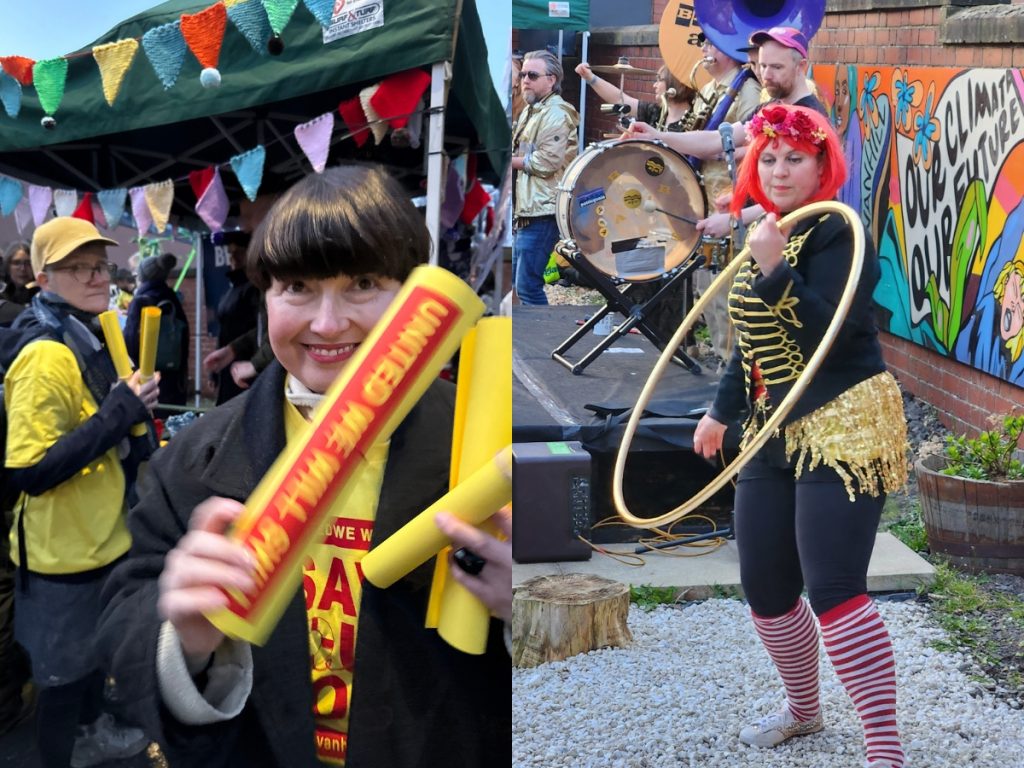
With the dozens of initiatives GBCT has launched, the charity also hosts a digital inclusion project to tackle digital poverty where residents receive basic courses to improve their tech skills. But as well as this, a local building transformed into a food shop known as The People’s Pantry was secured by the GBCT allowing volunteers to support 494 families, as well as selling 83,335 meal portions in 2024-2025 alone with food justice at the heart of their mission.
Fatima said: “At the Pantry you pay £5 and you get £30 pounds worth of shopping, so you still have to pay something, but what you get is subsidised. That generates about £50,000 in income and the other £100,000 is grant funding.”
“We grow our own mushrooms. We have community mushroom project called Community Champignons.”
“We have the highest rate of child poverty in Scotland. We want to help people with other poverty that’s impacting their food poverty which is electricity or living costs.”
“So, all those people running the People’s Pantry are being empowered to also challenge other forms of oppression that are keeping them in a position of having to use the People’s Pantry.”
“It’s not ideal. We are not a service provider. We’re doing that because we have to. I would rather give everyone £100 extra and they can decide how they want to spend their money.”
“It’s not just about the building, it never was. It’s about where that building sits within our community. It’s about the wellbeing of everyone in our community.”
GBCT has been working with equality think-tank Runnymede Trust’s Power to Prosper programme to address the causes of racialised poverty and “building collective power.”
The three-year initiative aims to collaborate with local hubs as well as supporting communities such as Govanhill to create change, with nearly £1 million having been granted to various groups making a tangible impact.
Power to Prosper has funded a community organiser role for GBCT held by Maariyah who is key in galvanising ideas and making them a reality.
Currently, the charity is working on securing a youth centre which will ultimately keep teenagers out of trouble and take pressure off local authorities as Glasgow has the highest rate of offending by young people in Scotland.
But all the essential projects the GBCT has brought to life stem from the ethos that led Fatima and others to stage the longest running occupation in the UK. It is the unshakeable belief that working class diverse communities deserve to have just as much access as “rich people.”
With Fatima’s determination to secure investment for the full refurbishment of the baths, she hopes the local community will seize the opportunity to learn to how swim – especially when 40% of children in Scotland lack the vital life-skill.
She said: “We don’t think that’s expensive [to renovate the baths], we think it’s an investment. And if you go to so many working-class communities, a lot of the old buildings are being left to rot.”
“We’ve been trying to get the government to understand the impact we’d have on the national health and social work.”
“Working class communities deserve a history and a heritage. It’s not just rich people who should have beautiful historical buildings.”
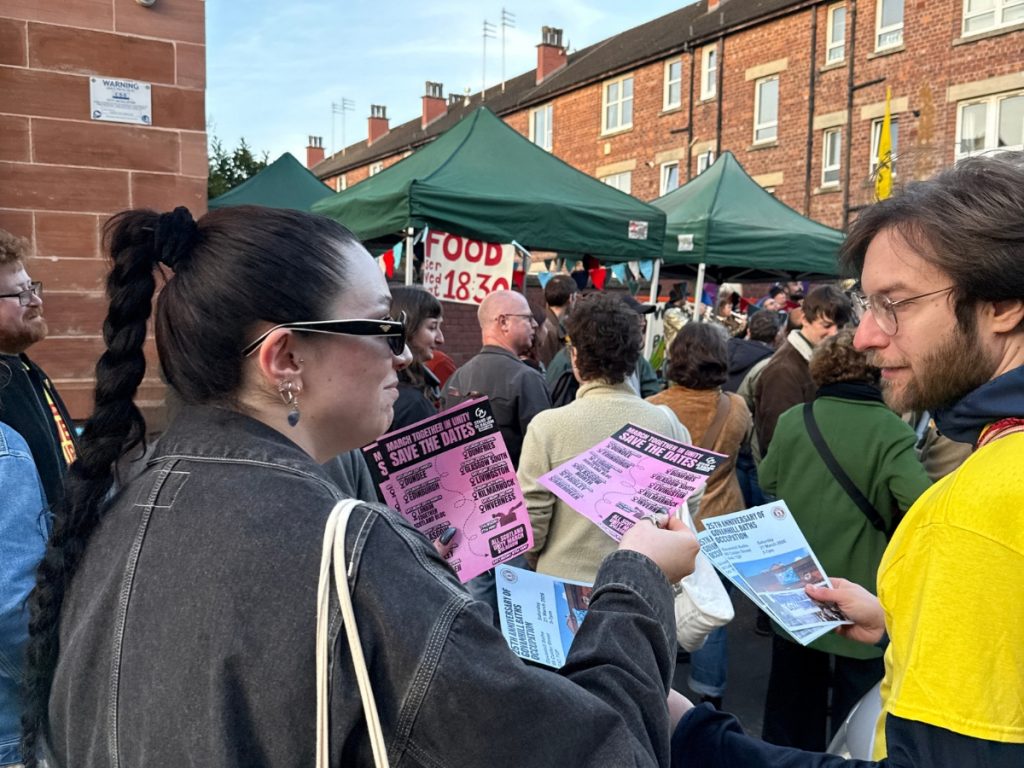
Till the funding is secured, on the heels of celebrating the occupation’s 25-year anniversary, Fatima has her sights set on continuing to make an impact by empowering Govanhill residents.
When the baths are finally reopened, which the charity head hopes will be in 2026, the community can close a quarter-of-a-century-long chapter and fully regain what they fought for to give to the next generation.